
Brazil Platform

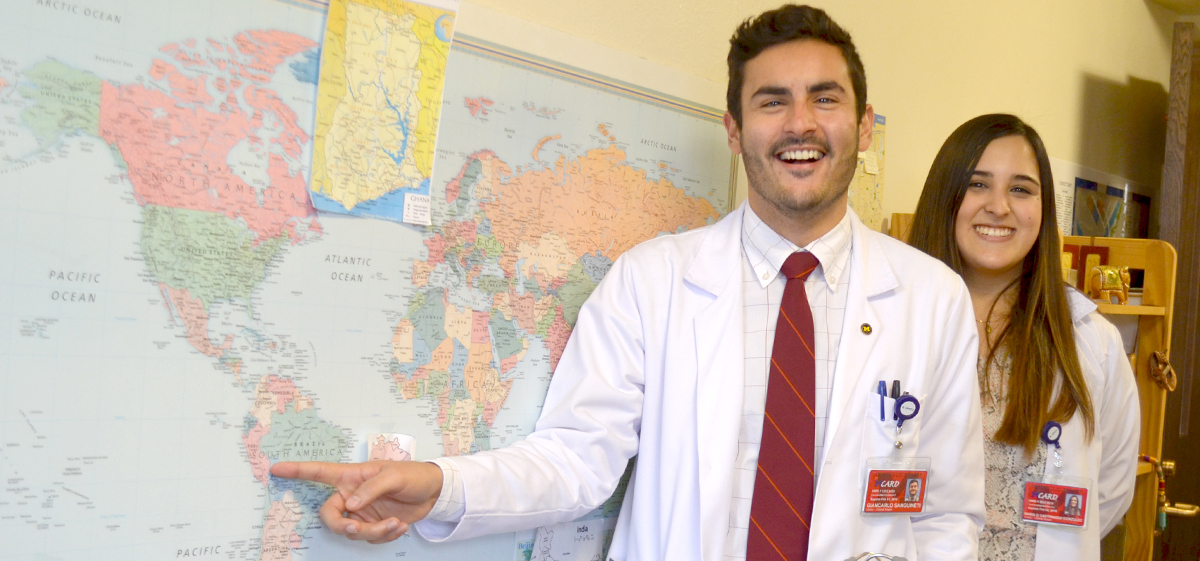
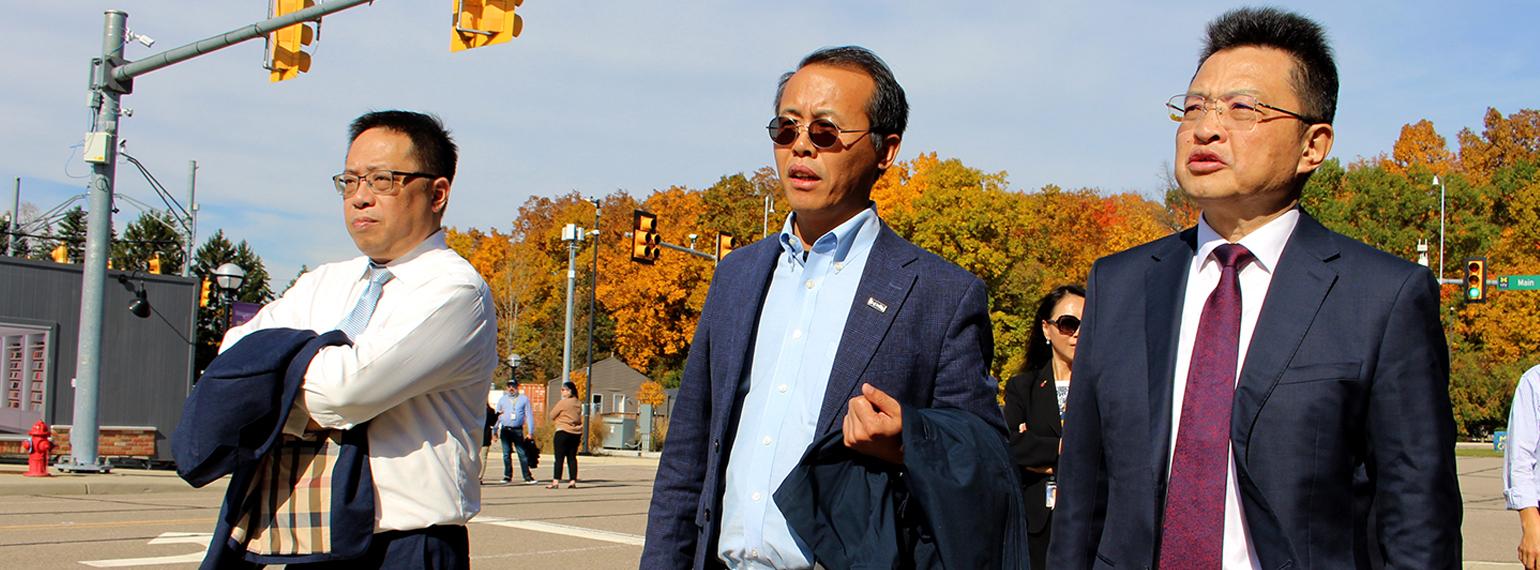
UMMS Dean Woolliscroft (center) receiving a token of friendship
UMMS Dean Woolliscroft (center) receiving a token of friendship from the University of Sao Paulo brought to him by Dr. Edmund Baracat (left) and Dr. Ana Claudia Latrônico (right)

Faculty members in the University of Michigan Medical School (UMMS) have been collaborating with partners in Brazil for more than a decade. UMMS has Memoranda of Understanding with both the Institute of Biomedical Sciences at the University of Sao Paolo (USP) and the University's Faculty of Medicine (FMUSP). FMUSP is widely considered to be the best medical school in Latin America, with a large research capacity and a network of hospital and ambulatory centers serving hundreds of thousands of patients.

In recent years, UMMS has been actively strengthening its collaborations with USP, building on a number of existing UMMS-FMUSP research programs with the aim of developing broader inter-institutional collaborations that could form the basis for a potential joint institute. In September 2012, University of Michigan President Mary Sue Coleman led a delegation to Brazil in 2012 to explore institutional partnerships. Two of the UMMS Brazil Platform faculty (Gary Hammer and Michele Heisler) served on the planning committee for the President's visit and accompanied her to Brazil as members of the delegation.

During her trip, President Mary Sue Coleman signed collaboration agreements with the University of Sao Paulo (USP) Medical School and the State of São Paulo Research Foundation (FAPESP), one of the main funding agencies in Brazil. The new agreements aim to stimulate collaboration between U-M researchers and researchers throughout higher education and research institutions in Brazil.  

if you have any inquires or suggestions about Brazil Platform, please contact Elisa Teixeira at elisadut@umich.edu, or call +1 (734) 763-9131.

News and Updates

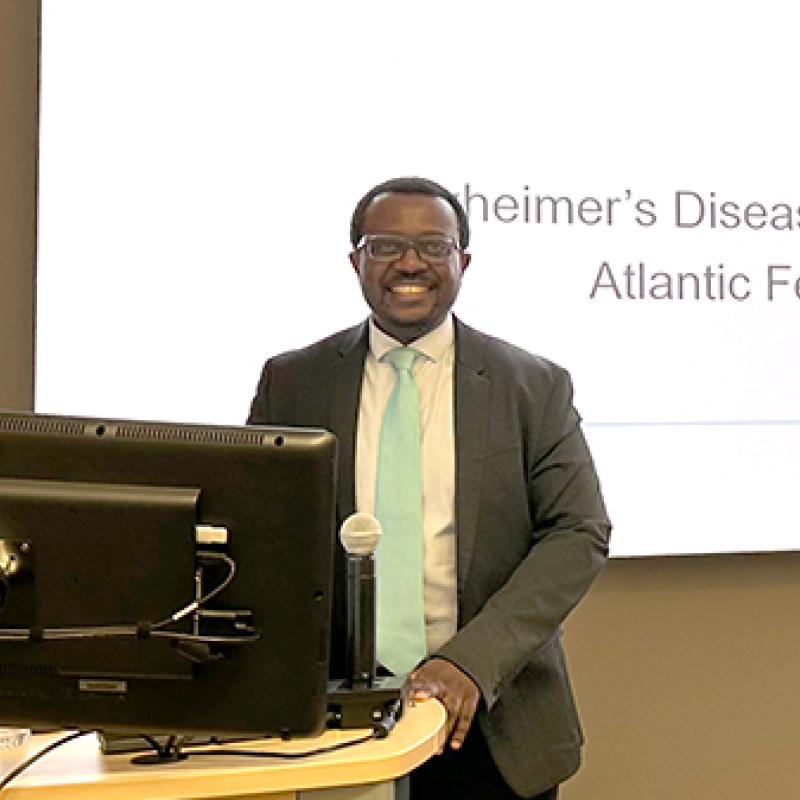
Dr. Tate delivering her lecture at Lucy Montoro Rehabilitation Hospital in Sao Paulo, Brazil.
  • A pre-trip interview with Dr. Heisler and Dr. Sueann Caufield (another member of the delegation) can be seen here.
  • More information about President Mary Sue Coleman's September 2012 visit to Brazil can be found here.
  • An article that appeared in the Detroit Free Press on January 14, 2013 can be found here.
  • A joint FAPESP-UM call for scientific proposals was issued following the signing of their agreement: deadline is February 15, 2013.
  • In December 2012, Dr. Denise Tate presented on the importance of collecting uniform data on SCI care to professionals at the Lucy Montoro Rehabilitation Hospital,  a state of the art facility in the city of Sao Paulo. 
  • In January 2013, Elisa Duarte Teixeira (elisadut@umich.edu) was hired as a part-time Project Intermediate Manager for Brazil Platform. She will be working with Dr. Heisler and the Global REACH team to determine and implement strategic plans for building research and educational collaborations between the University of Michigan and Brazilian universities and research centers. 

Research Programs

Adrenal and Other Endocrinological Cancers and Disorders

  • Brazil has one of the highest concentrations of adrenal cancer in the world with 15 percent more prevalence than anywhere else.
  • USP is the South American hub of activity in regard to adrenal cancer work, and U-M’s Endocrine Oncology Program is an lnternational Destination Program Center of Excellence for the treatment of adrenal cancer.
  • The two programs have collaborated on research studies over the years, and are now working to create combined data registries. Other joint projects include developing mass spectrometry methods to comprehensively examine steroid production and to detect partial blocks in specific steps in cortisol synthesis.
  • A recent publication (PDF) by researchers from the two institutions shows that the two common mutations in adrenal cancer are critical for the induction of the disease in humans and in mouse models.  It is a powerful example of how international collaboration (which is critical to make progress in the disease) AND how genomic platforms together with animal modeling can shed light on the pathogenesis of rare diseases like adrenal cancer.  The work was funded in part by NIH and in part by the Schembechler Adrenal Cancer Research fund.
  • Collaborators are also working on a joint Center grant application.
  • View a video interview with Dr. Gary Hammer about the importance of the adrenal cancer collaboration with the University of Sao Paulo.

UMMS Contact

Gary Hammer, MD, PhD
Millie Schembechler Professor of Adrenal Cancer, Professor of Internal Medicine, Professor of Molecular and Integrative Physiology, Director of Center for Organogenesis and Professor of Cell and Developmental Biology, Medical School

Photo by Fabio Venni under a Creative Commons license: BY-SA

Health Equity and Chronic Disease Management

  • FMUSP has a mandate to run all primary care centers (Basic Health Units- USBs) in Sao Paulo’s low-income Western Region (Região Oeste) where USP is located.
  • These centers are organized into healthcare teams consisting of 1 doctor, 2 nurses, 2 medical assistants, and 6 community health workers from the served communities.
  • U-M faculty members are working with USP colleagues to develop and test innovative approaches to improve community health worker-led patient chronic disease self-management training in Região Oeste.
  • The Região Oeste project itself is interdisciplinary, bringing together faculty and students from numerous USP departments and schools—including engineering, urban planning, environmental sciences, sociology, economics, and psychology, among others—to conduct interdisciplinary projects to study and improve conditions in the poor urban communities in the Região Oueste.

UMMS Contact

Michele Heisler, MD, MPA
Associate Professor of Internal Medicine, Medical School and Associate Professor of Health Behavior and Health Education, School of Public Health

Reproductive Endocrinology and Technology

  • UMMS researchers and USP researchers have been collaborating on projects since 2004.
  • UMMS Professor of Obstetrics & Gynecology Gary Smith serves as the Off-Site Scientific Director of the Huntington Centers for Reproductive Medicine of Brazil (HCRMB), which is now the largest in-vitro fertilization (IVF) clinic in the Americas performing over 3,000 cycles per year.
  • The collaborative team has completed phase I and II clinical trials, implemented state-of-the-art infertility treatment and fertility preservation technologies, and improved fertility healthcare. There have been 10 collaborative peer-reviewed publications since 2006, 23 national/international meeting presentations and abstracts, and 11 physician, fellow and/or student exchanges since 2004.
  • Current aims are to continue reciprocal training, research, and improvement of healthcare in reproductive endocrinology, gamete/embryo biology, and treating infertility.
  • The team is working to implement a Fertility Preservation Program at USP. This will provide on-site and off-site (across the entire country of Brazil) service of male and female gamete cryopreservation for individuals at risk of losing fertility do to gonadotoxic treatments for cancers, immune diseases, and transplant therapies.

UMMS Contact

Gary D. Smith, PhD, HCLD
Professor of Obstetrics & Gynecology, Professor of Physiology, Professor of Urology, Co-Director, Taubman Consortium for Stem Cell Therapies; Co-Director, Reproductive Sciences Program; Visiting Professor, University of Sao Paulo; Off-Site Scientific Director of Huntington Centers for Reproductive Medicine of Brazil (HCRMB)

Spinal Cord Injury

SCI co-investigator, Dr. Julia Greve (USP), visiting the U-M SCI outpatient clinic to observe patient walking with robotic assistive device
  • The incidence and prevalence of spinal cord injury (SCI) in the US and Brazil are among the highest in the world. The cost of caring for someone with SCI continues to exceed that of most disease conditions.

  • UMMS and MFUSP researchers are working together to develop a common database to collect information to be used in research to aid clinical care. The collaboration emphasizes the importance of standard datasets to guide clinical treatment and research in SCI. They have translated and completed psychometric studies of the SCI Bowel Function Basic dataset and are currently in the process of completing others for joint use in future clinical validation studies. Testing these datasets adds to the current studies being conducted at the U-M SCIMS which focus on examining the influence of bowel and bladder management on complications and quality of life after SCI.  Comparing data cross culturally is another added benefit of this international collaboration. The Presidents of the International Spinal Cord Society (ISCoS) and the American Spinal Injury Association (ASIA) have approved the project and the most recent updates were presented at the September 2012 meetings of the International Spinal Cord Society (ISCoS) in London.
  • Kidney failure is the number one cause of SCI related mortality. This group is interested in studying the best methods for neurogenic bladder and bowel care in this population.
  • The collaborating team is developing a short-term training program on SCI care and research for USP residents and an exchange program for UMMS PM&R residents giving them the opportunity to work with SCI inpatients and outpatients who are clinically and characteristically very different from SCI patients seen in Michigan.

UMMS Contact

Denise Tate, PhD, ABBP, FACRM
Professor of Physical Medicine & Rehabilitation, Medical School, Associate Chair for Research and Director, Model Spinal Cord Injury (SCI), Director, Advanced Rehabilitation Research Program

Endocrine Genetics Collaboration

  • Collaborations have existed for a number of years with shared publications and presentations, and UMMS faculty have taught short-duration courses at USP attended by students and faculty.
  • Dr. Carvalho, one of the major mouse users at USP, was a postdoc in Dr. Camper’s lab at UMMS. Camper and Carvalho have a collaboration aimed at identifying stem cell markers in pituitary gland using mouse models. The use of animals in research at USP is currently minimal, but expanding. One USP researcher using zebrafish is studying the effect of environmental toxins on fertility.
  • Camper also collaborates with Carvalho’s colleagues Drs. Mendonca and Dr. Arnhold. Mendonca is internationally known for her work in disorders of sexual development, while Arnhold is an expert in short stature.
  • Sao Paulo used to be the only site in Brazil that could treat patients with growth hormones, so they have a large cohort they are following from childhood through adulthood. Carvalho, Arnhold, and colleagues identify mutations in patients with short stature and growth hormone deficiency, Camper’s lab advises and assists with developing the functional tests when needed.
  • Plans are in the works to do SNP typing and exome sequencing on patients who have growth hormone deficiency, but have no mutations in known genes.

UMMS Contact

Sally Camper, PhD
James V. Neel Collegiate Professor of Human Genetics, Chair, Department of Human Genetics, Professor of Human Genetics and Professor of Internal Medicine, Medical School

Immunological/Pulmonary Diseases

  • Collaborations between UMMS and USP date back more than 10 years. Many high-level publications have resulted from these collaborations.
  • This partnership has resulted in many visiting scholars from Brazil, including three PhD postdocs and four PhD students. Two of the postdocs now hold faculty appointments and remain collaborators; one is at Sao Paulo State University, one at the Federal University of Rio De Janeiro.
  • Dr. Peters-Golden is a formal collaborator on grants held in Brazil by Professor Jancar and former trainee Professor Medeiros (Araraquarra).
  • During a visit in the fall of 2011, Peters-Golden visited with Dr. Carlos Carvalho, Professor of Internal Medicine and Director of Pneumonology, and his department. Based on their discussion, there is mutual interest to further explore possible opportunities for research collaboration and exchange of trainees at the fellowship level (i.e., individuals who have completed MD and internal medicine residency, and are in subspecialty training in Pulmonary and Critical Care Medicine).

UMMS Contact

Marc Peters-Golden, MD
Professor of Internal Medicine, Medical School, Pulmonary & Critical Care Medicine

UMich-Fiocruz Collaboration

The UMich-Fiocruz Collaboration is a joint project involving researchers of the University of Michigan and Rio de Janeiro’s Oswaldo Cruz Foundation, Fiocruz.  The program is part of the University of Michigan's Presidential Initiative on Brazil, launched in 2012. The Partnership works closely with the  Latin American and Caribbean Studies Center (LACS) and Global REACH.

UMich-Fiocruz Collaboration brings together researchers from both institutions working in the areas of health status, determinants, outcomes, interventions, and histories to engage in substantive and medium-range projects. The research methods are interdisciplinary, including quantitative and qualitative approaches (implementation studies, survey data collection, ethnography, archival research, and more). Four main research areas have been identified:

  1. Management and Prevention of Chronic Diseases 
  2. Women’s and Children’s Health 
  3. Historical and Anthropological Studies of Medicine, Health and Health Sciences 
  4. Health and Environment 

On the Michigan side, the interdisciplinary faculty group includes researchers based in the SPH, UMMS, SNRE, LS&A, and ISR. This three-year research collaboration will be consolidated at a research symposium being planned for August 2013 at the Fiocruz campus, in Rio de Janeiro, Brazil.

UMMS Contact
Alexandra Minna Stern, PhD
Professor, Department of Obstetrics & Gynecology, Department of American Culture, Department of History